Material histories
British artist Simon Starling, whose work has been shaped by the digital revolution of the early 2000s and the ensuing technological shifts, explores the nuts-and-bolts of art making, the material nature of these processes, and seeks to trace things back to their source. As masterful storyteller known for his historical digressions, detours, and meanderings as much as for his geographical wanderings, the artist focuses during this talk on material histories. Platinum and silver minerals, linked to the history of photography as much as to industry, have repeatedly found themselves at the very heart of the production and fabrication process of his work (from One Ton, II to The Nanjing Particles).
We will also dig into the alchemical dimension of his work. In Starling's work, materials take on an agency: silver, the emblematic material of the photographic image, can now be transformed into bronze, the emblematic material of sculpture, even if it requires the use of cutting-edge technologies. Extracting material from a print, extracting a mineral from the soil, extracting value from an object are all processes that the artist has been able to explore in works that take into account the manufacturing processes and the economic, aesthetic or ideological relationships associated with them.
Simon Starling was born in Epsom, England, in 1967. He graduated from the Glasgow School of Art in 1992, and was professor of fine arts at the Städelschule in Frankfurt from 2003 to 2013. His practice spans a wide variety of media, including film, installation and photography. Starling won the Turner Prize in 2005 and was shortlisted for the Hugo Boss Prize in 2004. He was a recipient of the Carl Nielsen and Anne Marie Carl Nielsen Honorary Award in 2024. He represented Scotland at the Venice Biennale in 2003 and has had solo exhibitions at an extensive list of galleries and museums, including Kunstmuseum Winterthur (2026), Gallerie Estensi, Modena (2022), Frac Ile-de-France, Le Plateau in Paris (2019), Musée regional d’art contemporain in Sérignan (2017), Japan Society in New York (2016), Museo Experimental El Eco in Mexico City (2015), Museum of Contemporary Art in Chicago (2014), Monash University Museum of Art in Melbourne (2013), Staatsgalerie Stuttgart in Germany (2013), Hiroshima City Museum of Contemporary Art in Japan (2011), Massachusetts Museum of Contemporary Art in North Adams (2008), Power Plant in Toronto (2008), Musée d’art contemporain du Val-de-Marne in Vitry-sur-Seine (2009), Tate Britain in London (2013, 2009) and Temporäre Kunsthalle Berlin (2009).
Starling lives in Copenhagen.
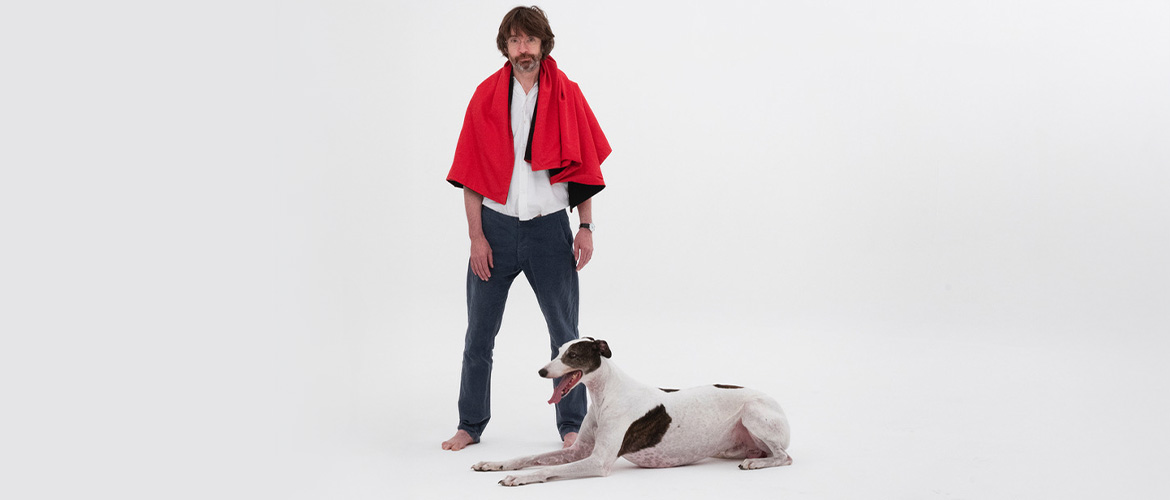
Photo credit : © Karl Isakson