A veritable observatory of analyses and a platform for experimentation, the 'Troubles, Alliances and Aesthetics' Chair studies relations of proximity, neighbourhoods, affections and intimacies as they emerge from the so-called margins of gender, sexuality, race and class. What formats of life and what forms of existence have the encounters between our bodies, our subjectivities and our communities provoked in the past and are they engendering today, in the fields of theory, activism and artistic practice? 
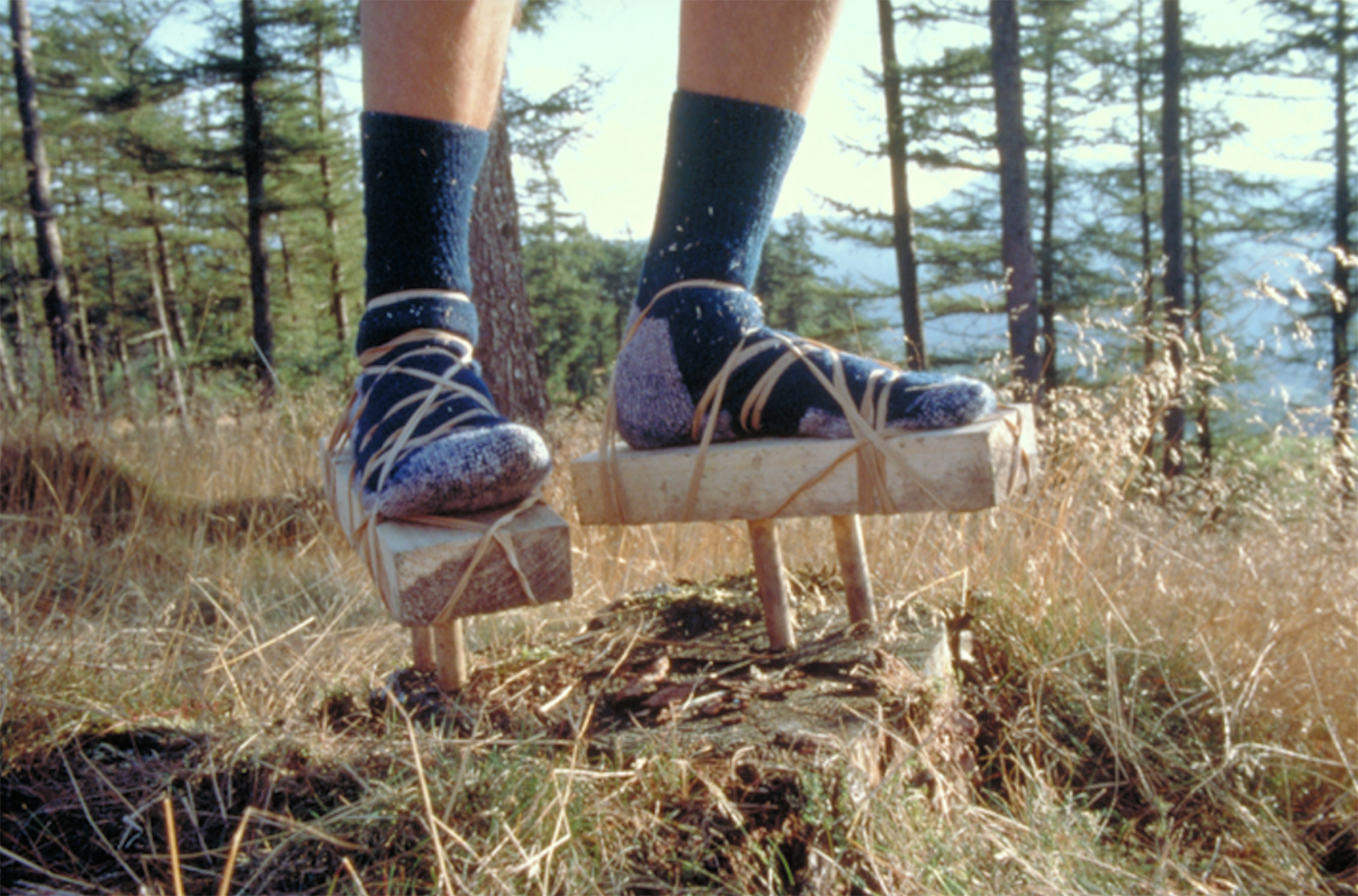
The 'Inhabiting the landscape. Art meets the living" (2020-2022) proposed to explore how art can be closely woven into a pre-existing living territory. The "Artistic practices of hospitality for the living" Chair proposes to take the investigation a step further, with a new question as its compass: how can art create a living territory? The experimental laboratory for this Chair is the School itself, its buildings, courtyards and gardens.

The artist gives force to the issues of the world by gathering for his or her work scattered knowledge that he or she deepens, diverts or brushes aside, but which he or she uses as so many inspiring elements to formulate his or her vision. This particular use of available knowledge, this way of delving into the new, the old, the obsolete, the essential and the marginal with the same passion, of plunging into the incomprehensible, characterises artistic practices.


Photography today is undergoing profound changes, both technically and artistically. While its use in artistic creation has long been a given for today's institutions and discourse on art, the limits of the medium are constantly evolving, giving rise to multiple hybridisations with other techniques and renewed questioning of the very nature of the photographic process. On the one hand, 'artificial intelligences' - image-producing algorithms - are challenging us to redefine photorealism.

Event cancelled due to new health regulations


On the occasion of the Nuit des Musées, discover Le Théâtre des Expositions, a composite, disordered and experimental piece written by students of the "Exhibition Professions" program, with free admission.


Many museums will open their doors free of charge throughout France and Europe from dusk until midnight. Guided and illuminated tours, fun itineraries, workshops, screenings, tastings, live shows and exceptional events will give a wide public a museum experience that is both friendly and fun.

An exhibition with Ariane Jouhaud, Arthur Guespin, César Ropponen Brunel, Elisa Florimond, Gabriel Day, Kieu-Anh Phuong Nguyen, Lauren Januhowski, Lucille Leger, Maïa Lacoustille, margaus, Margaux Cusin, Nastassia Kotava, Noémie Pilo, Rémi Coignec, Victoire Gonzalvez.


Wernher
Bouwens

Printmaking-bookmaking

Fascinated by the perception of colors and the visual experience par excellence, Wernher Bouwens has developed a practice that unfolds in the fields of painting and publishing, but also in the context of monumental installations. He explores the relationships between transparencies, wefts, wefts, superpositions, movements, vibrations, colors and volumes. He aspires to astonish the spectator by offering him chromatic experiences, independent and surprising by their richness.


Julien
Sirjacq

Printing and Publishing

Painting, screen printing, video, sound... Julien Sirjacq deploys his artistic work across different platforms with different collaborators. He co-founded “The Bells Angels” in 2009 with artist Simon Bernheim (musician of the group “10lec6”, Ed Banger label). Their multidisciplinary approach penetrates a wide range of mediums, from painting and installation to sound and publishing.

Aurélie
Pagès

Printmaking-bookmaking professor

With Aurélie Pagès, publishing is an artistic practice in its own right in which the artist's gesture is understood in all its singularity. His research in graphics focuses on images and reproduction processes, including those related to writing and editing.

List of places


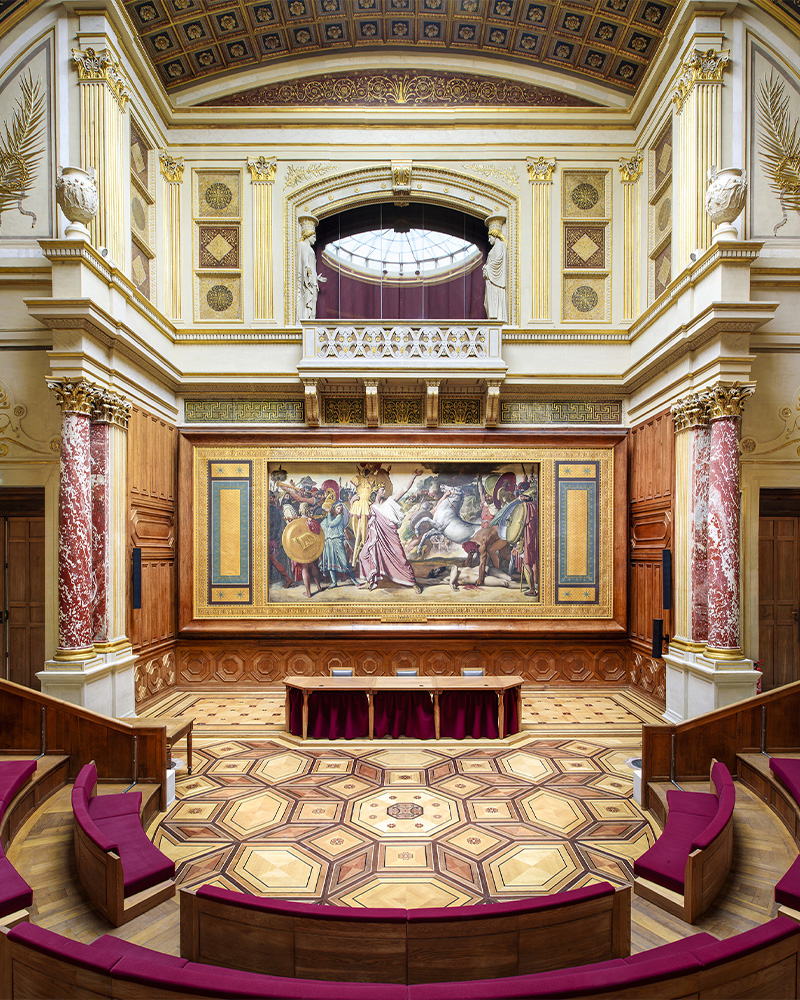
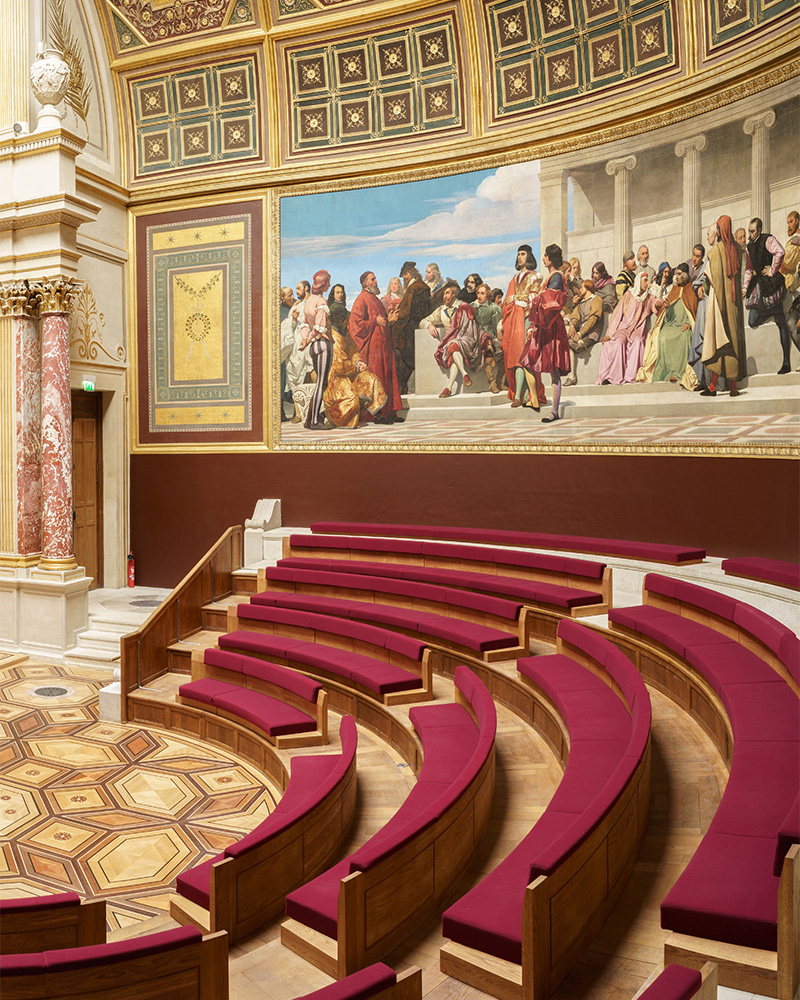
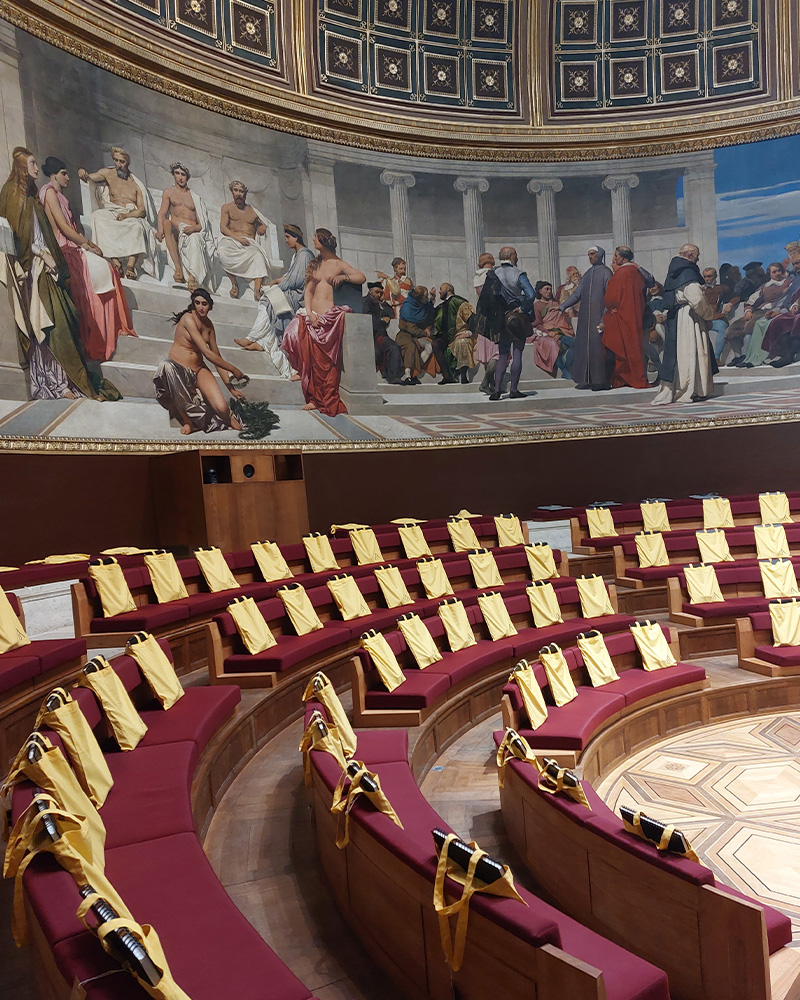
In a symbolic axis starting from 14 rue Bonaparte, and within the Palais des Études, this hemicycle was the space for the consecration of the Grand Prix de Rome, awarded to the best students. Nowadays, it remains the place for the graduation ceremony, and in the context of cultural programming, prestigious conferences are regularly held.


CAPACITY

100 people