Patrick Boucheron has been a professor at the Collège de France on the "History of Powers in Western Europe, 13th-16th century" chair since 2015. While his work focuses primarily on the urban history of medieval Italy, he is also interested in the writing and epistemology of history, attempting to re-articulate literature and the social sciences. He is involved in several projects, both editorial and audiovisual, which aim to defend the voice of a committed and scholarly discourse at the heart of the public uses of history.
Since the late 1960s, Bertrand Lavier's work has continued to subvert the traditional categories that compartmentalize artistic creation, with the artist exploring the relationships between painting and sculpture, representation and abstraction, life and art. Passing with ease from one medium to another, he continually develops and experiments with strategies of translation, transposition and conversion, ultimately disrupting our familiar ways of perceiving and conceiving art.
Leïla Slimani is a journalist, novelist and was awarded the Prix Goncourt 2016 for her second novel Chanson douce. In her stories and articles, she develops a remarkable talent for observing and analyzing modern life, with a particular interest in the secret life of women. Her latest novel Le pays des autres relates a family saga at the crossroads of Franco-Moroccan history and her own family's history.
"For a culture of the living": How can we contribute to a cultural battle that would restore the importance of the living and give it another place in the fabric of our common world?
Conference within the framework of the Chair "Inhabiting the landscape: where art meets the living world", coordinated by Estelle Zhong Mengual.
Catherine Malabou is a specialist in contemporary French and German philosophy. She works on the importance of the concept of plasticity in neurosciences.
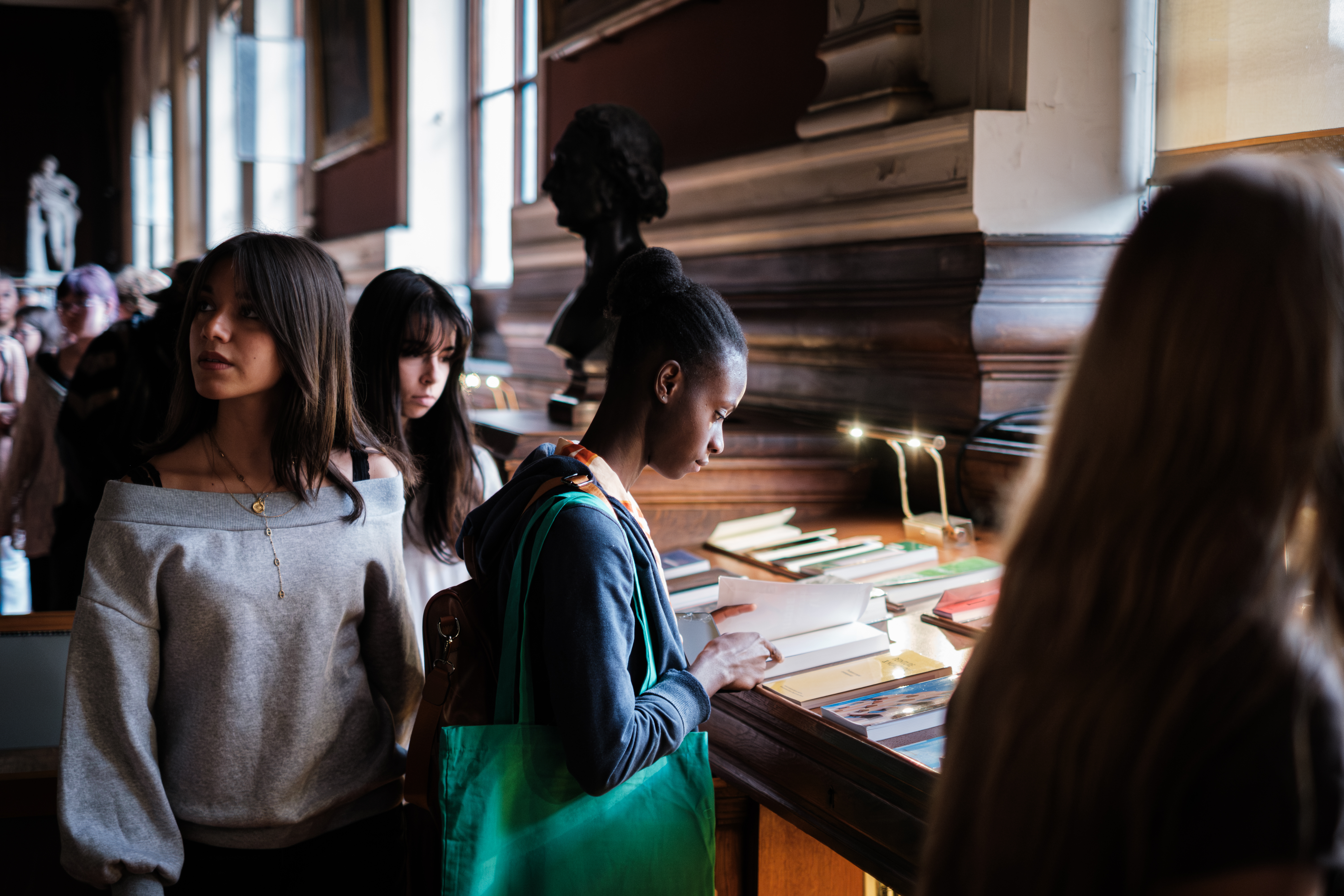
The PSL University Beauty Chair(s) accompanies the implementation of projects dedicated to prospective approaches around the notion of beauty and launches its first call for collective and transdisciplinary projects. It is open to the entire academic community (from the exact sciences to the arts, including the humanities and social sciences) without restriction in terms of disciplines or methodology. One to three projects will be selected and will benefit from support ranging from 5,000 to 30,000 euros.
The association of the Friends of the Fine Arts of Paris awarded 6 prizes to the students of the School chosen by a jury of personalities from the world of arts and culture. These distinctions are awarded by faithful and generous patrons passionate about young creation.
agnès b. prize
Randa MADDAH - Pagès studio
Thaddaeus Ropac prize
Théo AUDOIRE - Cogitore, Trouvé and Burki studios
Weil, Gotshal & Manges Law Firm prize
Raphaël MAMAN - Trouvé studio
An exhibition of Adrien van Melle at the Jean-Jacques Henner Museum, the fourth artist invited in residence at the museum in the framework of a partnership with the Beaux-Arts de Paris.
A Journey is rooted in the one the artist made in July 2020, from Paris to Rome, from the Jean-Jacques Henner Museum to the Villa Medici, in the footsteps of his predecessor, winner of the prestigious Prix de Rome in 1858 with Adam and Eve finding the body of Abel (Paris, École nationale supérieure des Beaux-Arts, deposit at the Jean-Jacques Henner Museum).
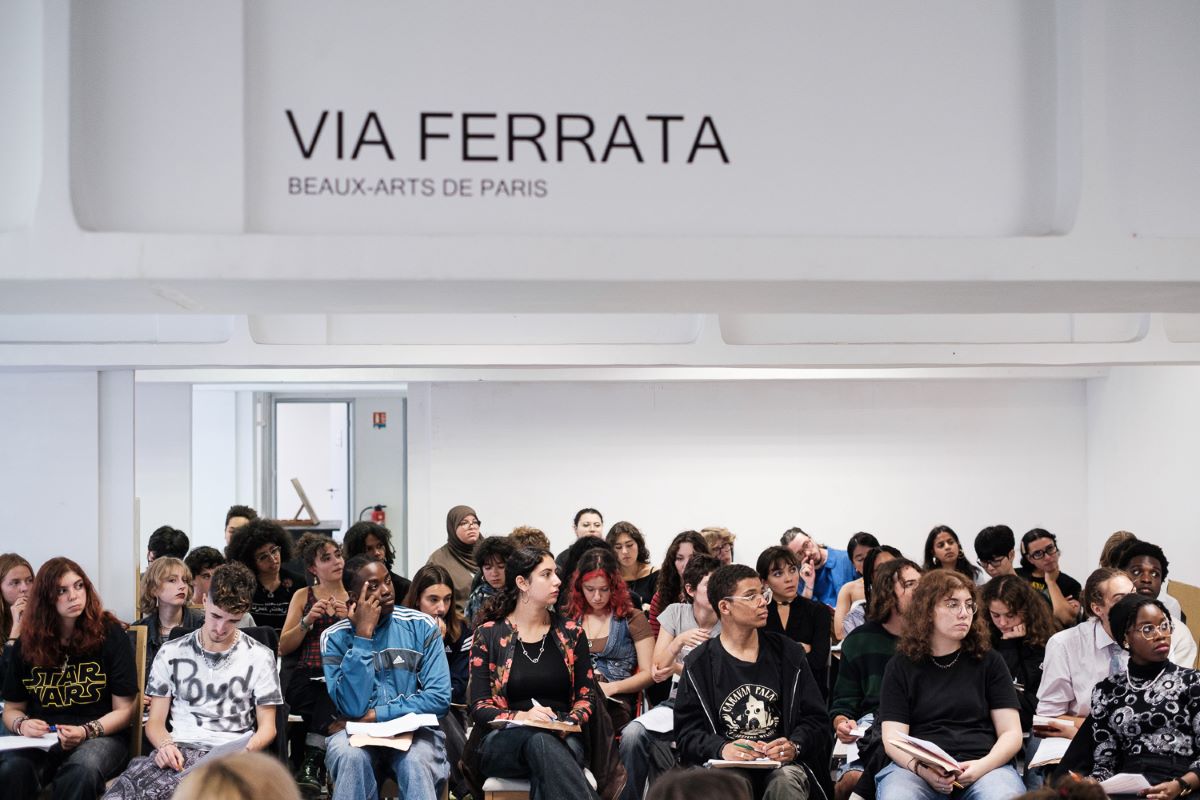
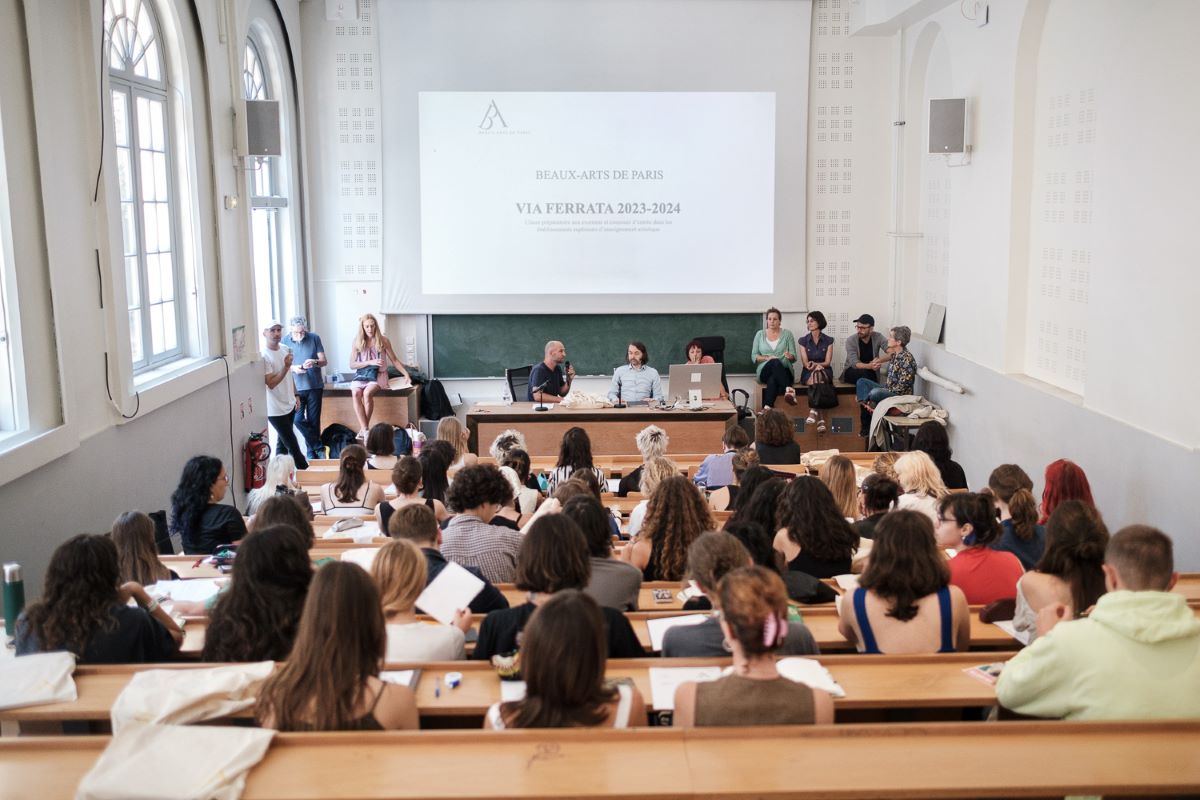
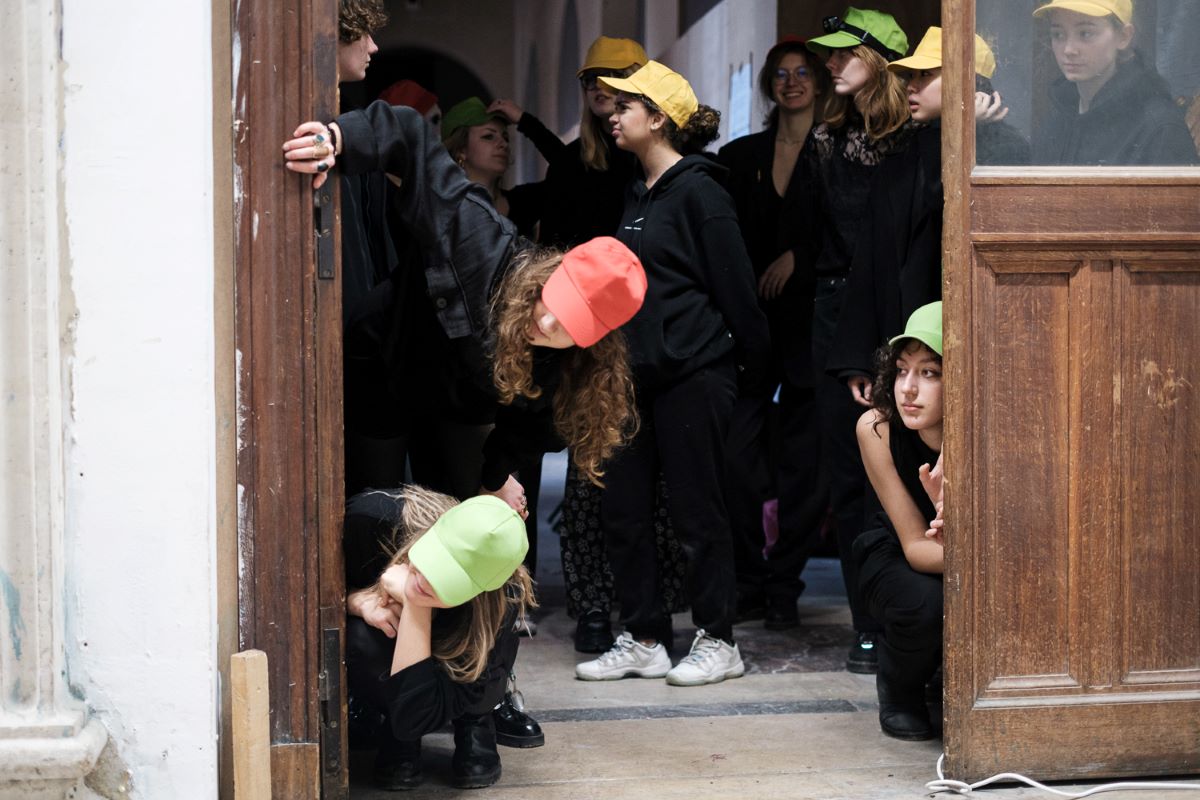
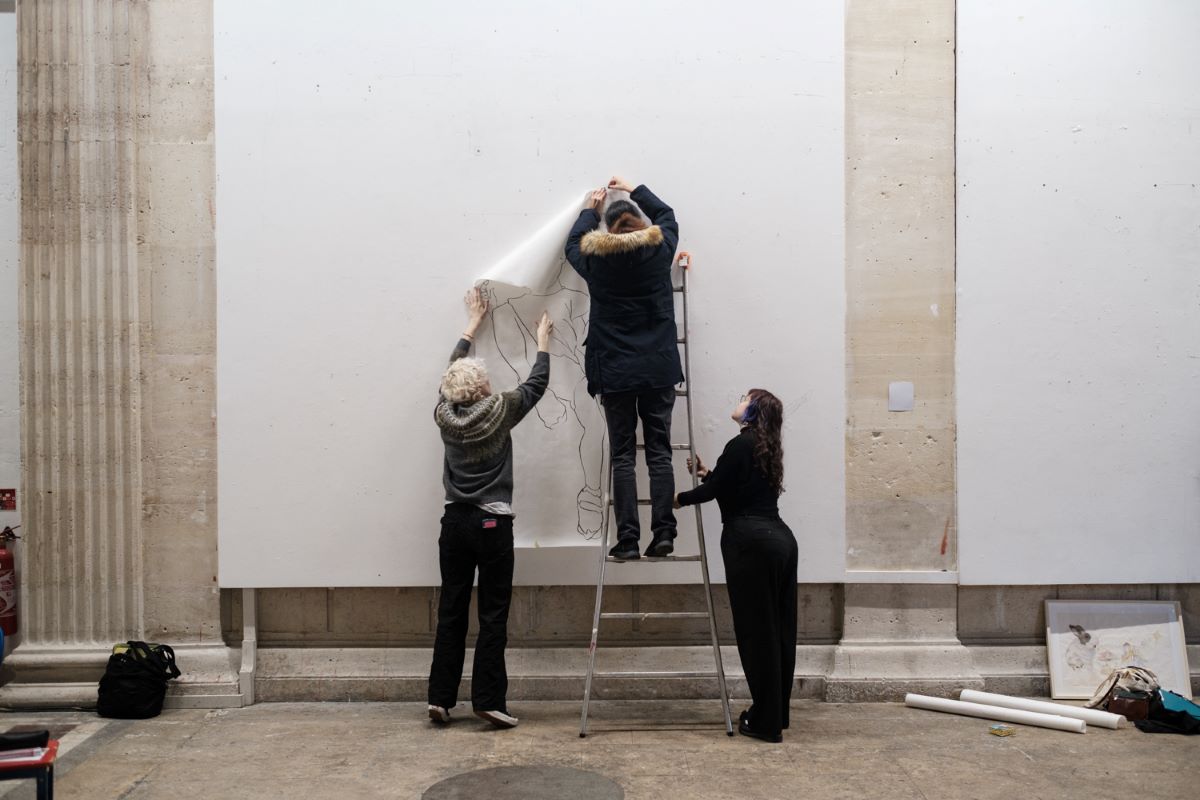
VIA FERRATA is an integrated preparatory class at the Beaux-Arts de Paris since 2016.
This public preparatory class prepares 50 students from socially, geographically and culturally diverse backgrounds for the exams and entrance examinations to higher art schools (95% success rate).
VIA FERRATA offers practical and theoretical training, and personalized pedagogical support.
Julien
Sirjacq
Born in 1974. Lives and works in Paris. Printing / Multiples Screen printing, video, sound, painting…